Neat overhead ethernet cable run on supports above an office ceiling

30+ YEARS OF NETWORKING AND IT SECURITY

Make the cable the part you already trust.

Trail Cutter Services installs new ethernet plants, repairs the ones already in the building, and certifies the links. Thirty-plus years of networking and IT security experience is why the test matters: a certified drop is a result you can keep, not a hope that the jack is fine.

Kansas City metro, including Liberty, Missouri, and Leavenworth County

Request a Site Survey and Written Estimate

Tell us what is failing, or what you are about to open. We look at the building, then send a written estimate.

Photographs show the kind of work. They are not photos of a Trail Cutter job.

The wiring someone else can follow.

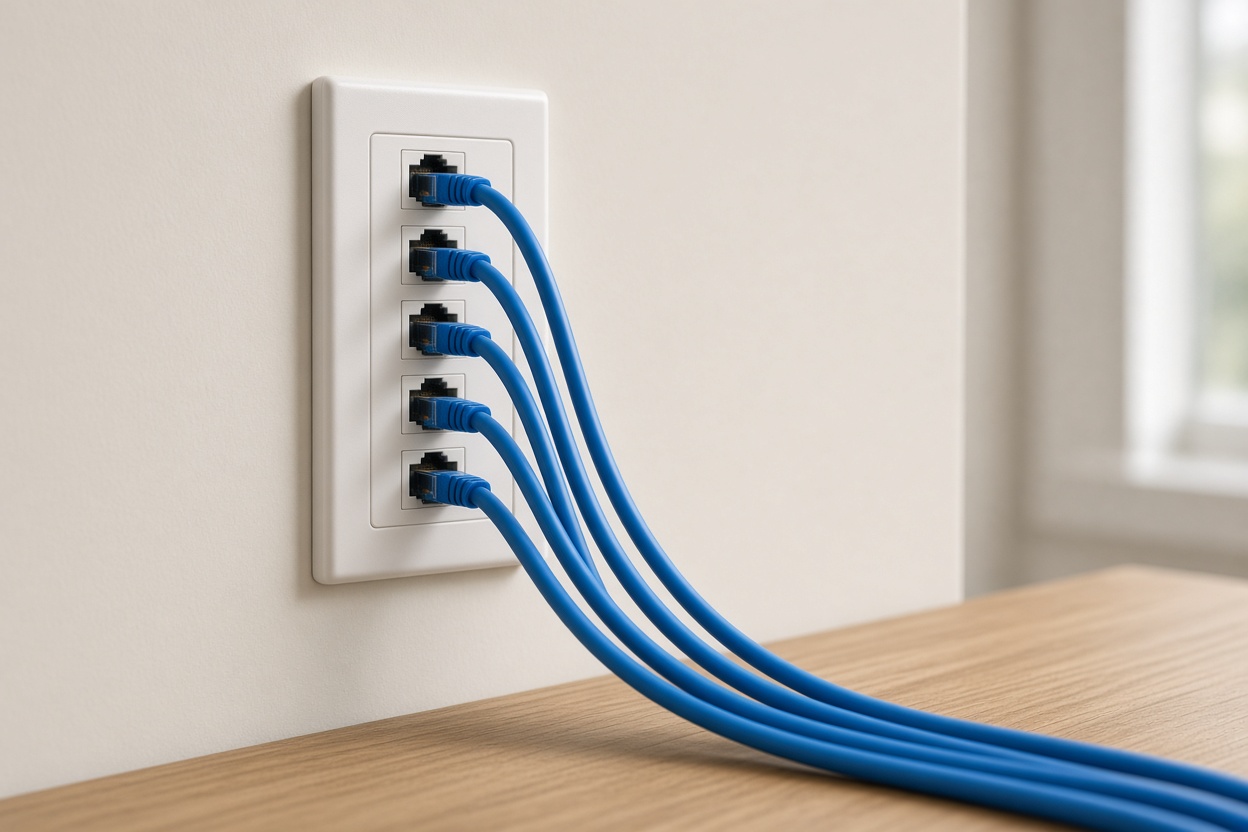
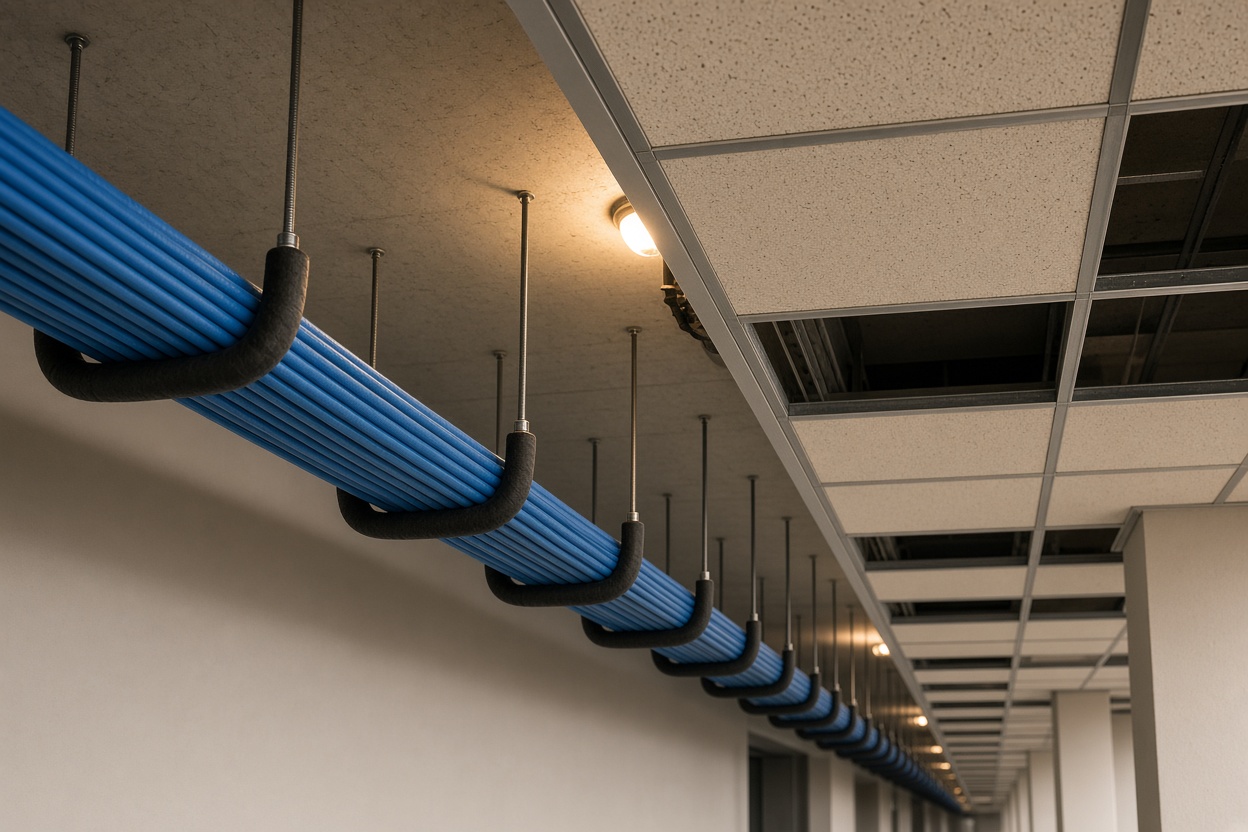
An ethernet plant is the permanent cable in the building. The run carries the link. The patch panel gathers those links in the closet. The wall plate is where a desk, a phone, an access point, or a camera plugs in. When a port in the closet matches a plate in the room, the next person is not guessing.

Neat overhead ethernet cable run on supports above an office ceiling
Cable run
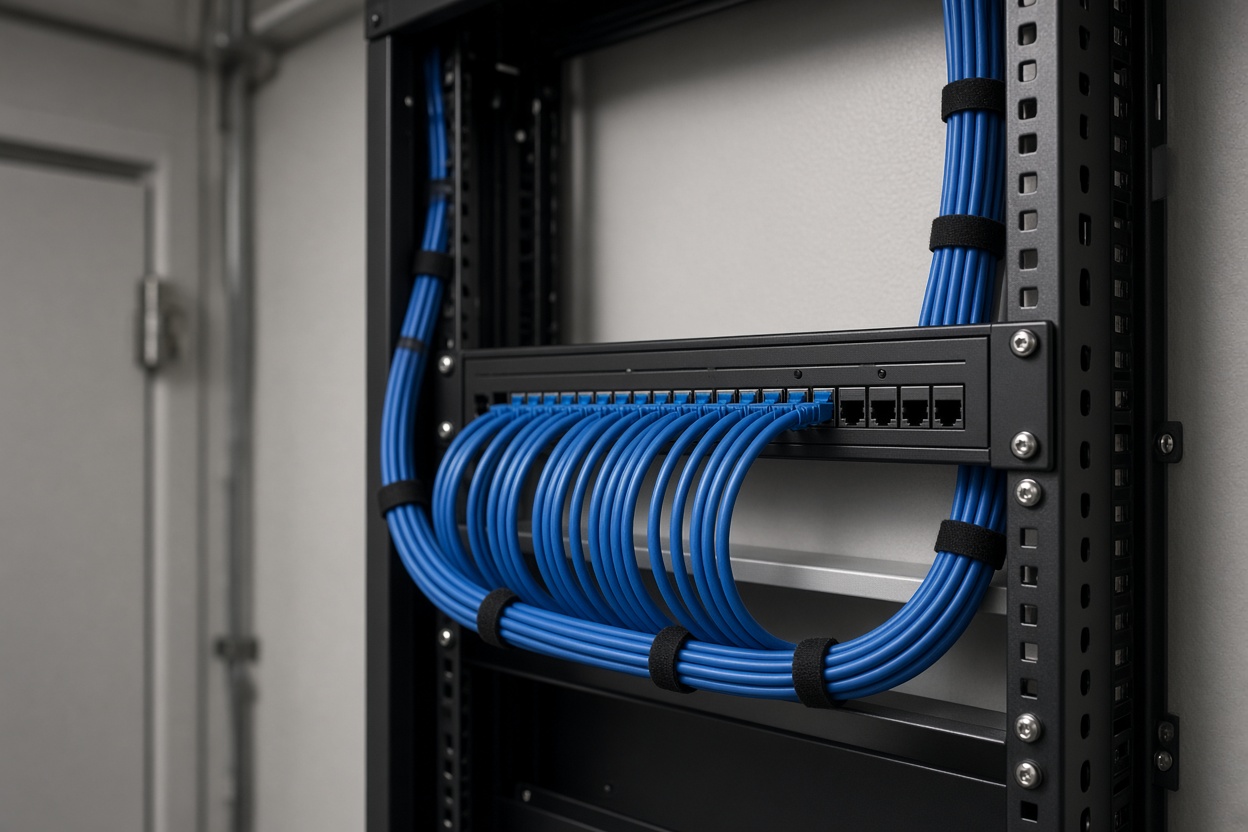
Ethernet patch panel with blue patch cables dressed into a rack
Patch panel
Ethernet wall plate at desk height with blue patch cords
Wall plate

Photographs show the kind of work. They are not photos of a Trail Cutter job.

Several names, one plant.

People ask for ethernet cabling, network cabling, data cabling, structured cabling, or low voltage wiring. On this page those names are the same plant. A phone and a computer can share one drop. The cameras, the door readers, and the network gear sit on it later.

Three ways to put the plant right.

Start with the job in front of you. Add certification when you want proof the cable will hold, not a guess that it might.

New plants and drops

A new room, more desks, or a building that has never had a plant you can trace. We install the run, the patch panel, and the wall plate, and we label each drop from the closet to the jack. The panel and the jacks are Leviton. See why that hardware.

Repair

A dead jack, a crushed run, a bad end, or a cable nobody can find. We locate the fault and put that part of the plant back to work, including a plant we did not install.

Certification

The test people ask for when the network misbehaves and nobody has proved the cable. Certification hardware checks the links in the scope and hands you the results. Use it on our install, on a repair, or on a plant someone else left behind. See why it is worth doing.

The jack and the panel are Leviton.

A drop fails at the two ends people touch: the jack in the wall, and the port on the patch panel. On our cabling projects those parts are Leviton. We do not finish a new plant with a no-name jack.

A category rating only says a jack can pass on the day it is installed. The difference shows up later, after a phone plug, a half-seated cord, or years of a camera drawing power through the same opening. Leviton designs its commercial connectors for that use. That is the hardware we put on the plant.

Leviton Cat 6A QuickPort patch panel, 24 numbered ports, with the jacks installed
Leviton Cat 6A QuickPort panel with the jacks in place. The ports are numbered.
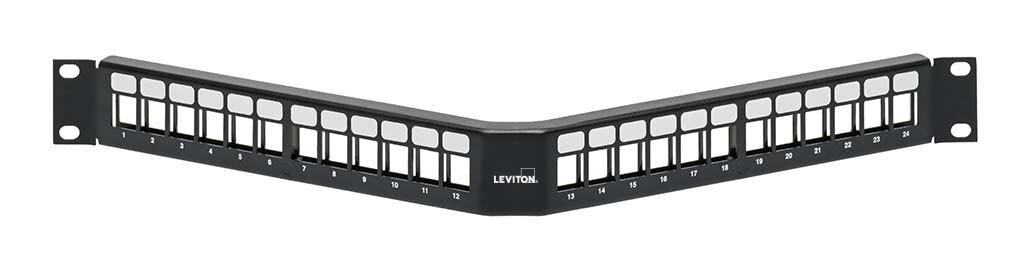
Leviton angled QuickPort patch panel, 24 numbered openings
Leviton angled QuickPort panel. The angle sends the cords toward the side of the rack.
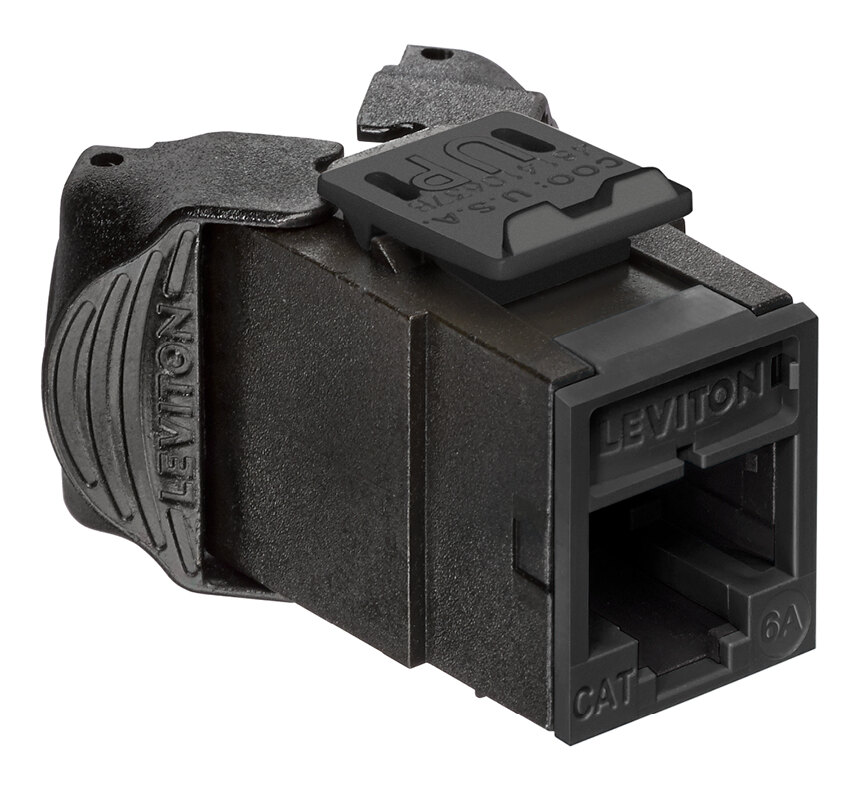
Leviton Atlas-X1 Cat 6A jack, with the wire cap and the port face visible

The jack is an Atlas-X1.

The wall plate and the panel take a Leviton Atlas-X1 jack. The one shown is the Cat 6A UTP QuickPort jack.

The body is die-cast zinc. Leviton says that metal sheds 53 percent more heat than a plastic jack when the port carries Power over Ethernet. The wires land without a punch-down tool. Leviton tests the contacts for 3,000 plug insertions, and the rear contacts for 20 re-terminations. Retention Force Technology is built into this jack.

It survives a phone plug.

People push a telephone plug into a data jack. The shoulders of that plug bend the outer contacts, and the next ethernet cord no longer makes a full circuit. Leviton says the usual connector standards barely test this. Its commercial jacks use a patented spring, Retention Force Technology, that pushes those contacts back into place. Leviton’s own comparison shows its Cat 6 jack undamaged after that plug, and a competing jack with bent contacts.

The contact stays gold.

The metal the plug rubs is where a cheaper connector saves money. Leviton says some connectors skip the gold on that contact, then corrode, and fail sooner when the jack also carries Power over Ethernet. Its Atlas-X1 Cat 6A jack specifies 50 microinches of gold over nickel.

Power does not flicker the link.

Cameras, phones, and access points draw power through the same jack that carries the data. If the plug shifts, the contact sparks and the link drops. Leviton uses Retention Force Technology to keep the plug seated so that spark does not start. The wires in the back land in gas-tight contacts, so the copper joint resists corrosion for the life of the jack.

The closet and the wall plate stay one system. The panel takes the same Leviton jacks as the wall.

A repair can still start on a plant someone else installed. When we replace a jack or a panel, the new part is Leviton.

Retention Force Technology, the phone-plug comparison, and the Power over Ethernet contact design are Leviton’s, from its Retention Force Technology application note. The gold thickness, the zinc body, and the insertion counts are from the Leviton Atlas-X1 Cat 6A jack specification. The note about connectors that skip the gold is from Leviton’s Power over Ethernet brief. This is not a Leviton warranty, and Trail Cutter is not describing itself as a Leviton dealer.

Why certify the cable.

A bad cable rarely looks like a bad cable. The jack is on the wall. The patch cord clicks. The trouble shows up as a dropout, a disconnect, or a link that is fine until the building is busy. People replace the computer, blame the Wi-Fi, or call the internet provider. Certification is how you take the cable off that list.

You want it when the answer has to outlast the visit. We test the links in the scope with certification hardware. You receive the results, tied to the label on each drop. A passing result means that link does the job of the cable category we tested, without the defects that make an ethernet connection drop out or disconnect. Hand that record to an IT person, a landlord, or the next technician.

A new plant

Move people in onto cable that already passed, instead of discovering the weak drop on Monday morning.

A repair

Leave with proof. The jack works because the link passed, not because someone plugged it back in.

A plant you already have

Stop living with “it drops out sometimes.” Certify the Cat5e or Cat6 you already have and find out which links are sound.

Certification is not automatic on every job. Add it when you want the record, include it with an install or a repair, or hire it by itself. The written estimate names the links in the scope.

What you keep when we leave.

  • Labels that match at the wall plate and at the patch panel, so the next person can follow every drop in the scope.
  • Test results for the links we certified, when you ask for that proof. That record is why certification is worth adding. See Why certify the cable.
  • A written estimate before the work, naming what is included.

Where a proven plant pays off.

Same work, in the building you actually have. Homes and businesses both live on the jack in the wall.

Office network cabling

Desks, a conference room, and a closet that still matches the floor after the furniture moves.

Warehouse cabling

Longer runs to the places the work actually happens, and a patch panel the floor can still trace.

New construction and tenant finish

Put the plant in while the walls and ceiling are open, and certify it before the first person sits down.

Buildings already in use

Add a drop or repair a jack around a building that is open. You do not have to start over.

How it starts

  1. Tell us what you need with the form on this page: a new plant, more drops, a repair, certification, or a mix.
  2. We walk the building. The pathways, the closet, and the plates set the plan.
  3. You get a written estimate that names the scope, including whether the links will be certified.
  4. We do that scope, and you keep the labels and any test results the estimate promised.

Kansas City metro, Liberty, and Leavenworth County.

Ethernet and low voltage cabling covers the Kansas City metro, including Liberty, Missouri, and Leavenworth County. If you are looking for a network cabling contractor or low voltage wiring in Kansas City, Liberty, or Leavenworth County, start here. Leavenworth, Lansing, Basehor, and Tonganoxie are in that county. Call so we can confirm your address.

Service areas for this work

Common questions

What is an ethernet wiring plant?

The permanent ethernet wiring in the building: cable runs, the patch panel in the closet, and the wall plates where equipment plugs in. Structured cabling, network cabling, and data cabling are other names for that same plant.

Can you add drops without replacing the whole plant?

Yes. New drops on a plant already in the building are part of installation. Existing Cat5e and Cat6 drops can be certified on their own, which is covered under “What do the test results tell me?”

Do you repair cabling you did not install?

Yes. Repair is for an existing plant. Certification can be hired for a plant someone else installed.

Is every install certified?

Not unless the estimate says so. Certification is its own service. Add it when you want a written result for each link, include it with an install or a repair, or hire it by itself for a plant you already have.

What do the test results tell me?

They tell you which links you can trust. Certification hardware tests the links in the scope and ties each result to the label on that drop. A passing result means that link does the job of the cable category we tested, without the cabling defects that cause dropouts and disconnects. You keep that record, and you can hand it to an IT person, a landlord, or the next technician before anyone blames the computer, the phone, the Wi-Fi, or the internet service. New plants, repairs, and existing Cat5e or Cat6 drops can all be certified. The longer explanation is the section “Why certify the cable.”

Do you install cameras, door access, or the network gear?

This page is the wiring plant. Cameras, door access, and the network gear are separate work. They need this plant to plug into.

How much does it cost?

We look at the building and send a written estimate. Drop count, the path the cable has to take, and whether the building is occupied all change the number. We do not publish a per-drop price.

Which cable do you install?

We match the cable to the run and confirm it on the survey. Cat5e is the older office plant we still repair and certify. Cat6 is the usual choice for a new workstation drop. Cat6a is the step up when the run or the speed needs it. Fiber is the backbone when copper is the wrong reach. The estimate names what we will install.
Tell us about the building.

Tell us about the drops, the trouble, or the space you are opening. We visit and send a written estimate for new work, a repair, certification, or a combination.

What do you need?

Choose at least one.

What is in the building, and about how many drops.

We look at the building before we price the work.

Or call (913) 306-8999.