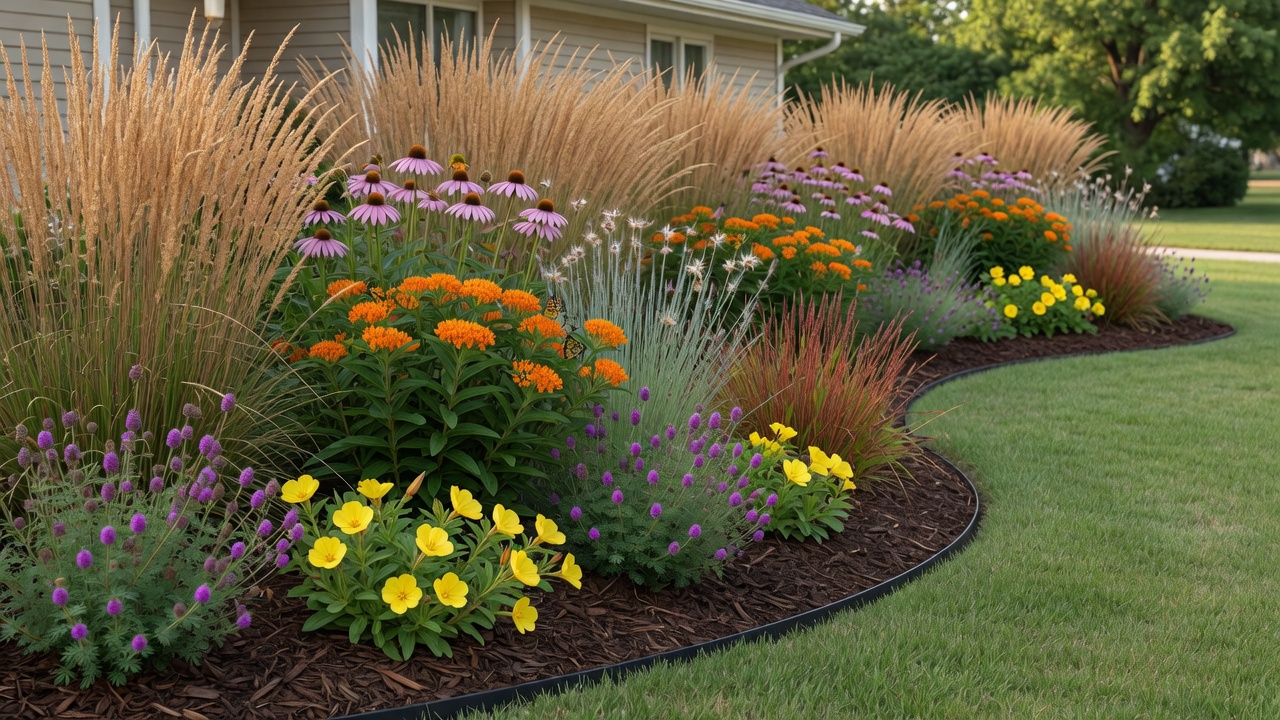
Professionally installed native plant bed featuring Prairie Dropseed, Butterfly Milkweed, Pale Purple Coneflower, Little Bluestem and Missouri Primrose in a designed Leavenworth County residential yard with clean mulch edges
NATIVE PLANT BEDS & LANDSCAPING
Part of our Planting Beds services

Beautiful Native Plant Beds That Actually Thrive

Professionally designed and installed using proven species from Grow Native! resources — reliable results with lower long-term maintenance and water use.

35-mile radius around Leavenworth • Professional installation • Designed for success

Primarily Native Species (Grow Native! aligned)
Designed for Success (not seed mixes)
Pollinator & Wildlife Friendly
Lower Water & Mowing Once Established
Bundles with Irrigation, Lighting & More

Why Choose Professional Native Landscaping?

Many "native" plantings disappoint because they use poor species mixes or skip proper establishment. Trail Cutter Services delivers designed native beds using primarily species recommended by Grow Native! resources — selected for our local soils, climate, and pollinators. The result: attractive, layered plantings with year-round interest, reduced mowing and watering once established, and real support for local wildlife.

RELIABLE ESTABLISHMENT

Proven Installation Practices

Proper site prep, correct spacing, quality mulch and clean edges for a crisp, residential look from day one — not a weedy appearance.

FOUR-SEASON INTEREST

Structure + Color Year Round

Grasses provide winter structure and movement. Bloom succession from spring primrose through late asters, plus dramatic fall color from little bluestem.

LOWER LONG-TERM COSTS

Less Water, Less Mowing

Once established (typically after 2–3 years), native beds need far less irrigation and mowing than traditional turf or non-native plantings.

WILDLIFE VALUE

Real Pollinator & Bird Support

Butterfly milkweed for monarchs, coneflower seed heads for birds, asters for late-season bees — chosen for documented local ecological benefit.

FLAGSHIP OFFERING

Our Standard Native Plant Beds

Our standard beds feature a proven mix of native grasses and forbs, including Prairie Dropseed for elegant structure, vibrant Butterfly Milkweed for monarchs and pollinators, Pale Purple Coneflower, Little Bluestem with stunning fall color, Purple Prairie Clover, Missouri Primrose, and late-season asters.

Unlike generic wildflower mixes, our beds are installed with the right spacing, mulch, and edges for a clean, professional look from day one — plus focused care during the critical establishment period.

Typical bed sizes
  • • Accent / Entry Bed: 50–100 sq ft
  • • Standard Residential: 150–300 sq ft
  • • Feature or Large Bed: 300+ sq ft

Custom quotes based on site conditions, size, and any add-ons (rain garden tie-ins, shade palette, etc.).

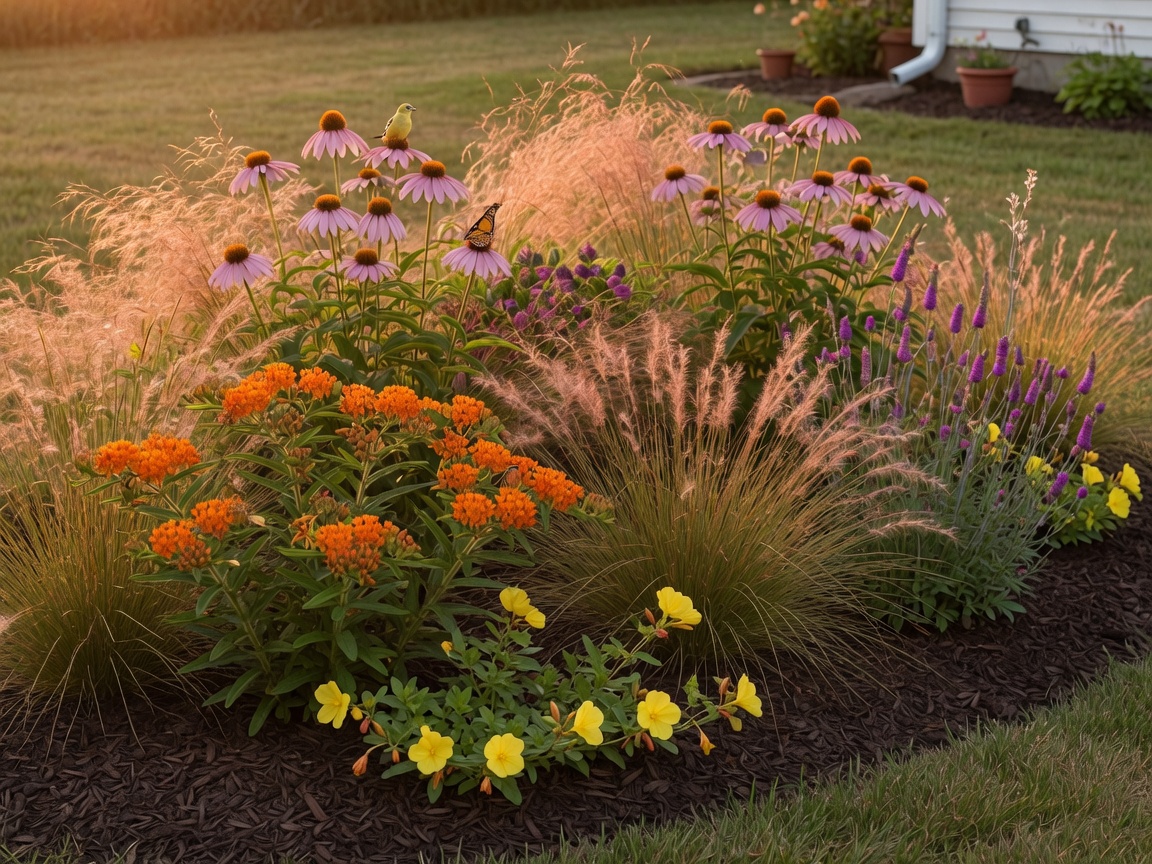
Close view of a designed native bed with layered Prairie Dropseed, Butterfly Milkweed, Pale Purple Coneflower and native grasses showing clean professional edges and healthy establishment

Example composition using our core sunny-bed palette. All primary images created with the exact recommended species.

CORE PALETTE

Featured Native Plants

Selected primarily from Grow Native! recommendations for reliable performance, bloom succession, and wildlife value in our region.
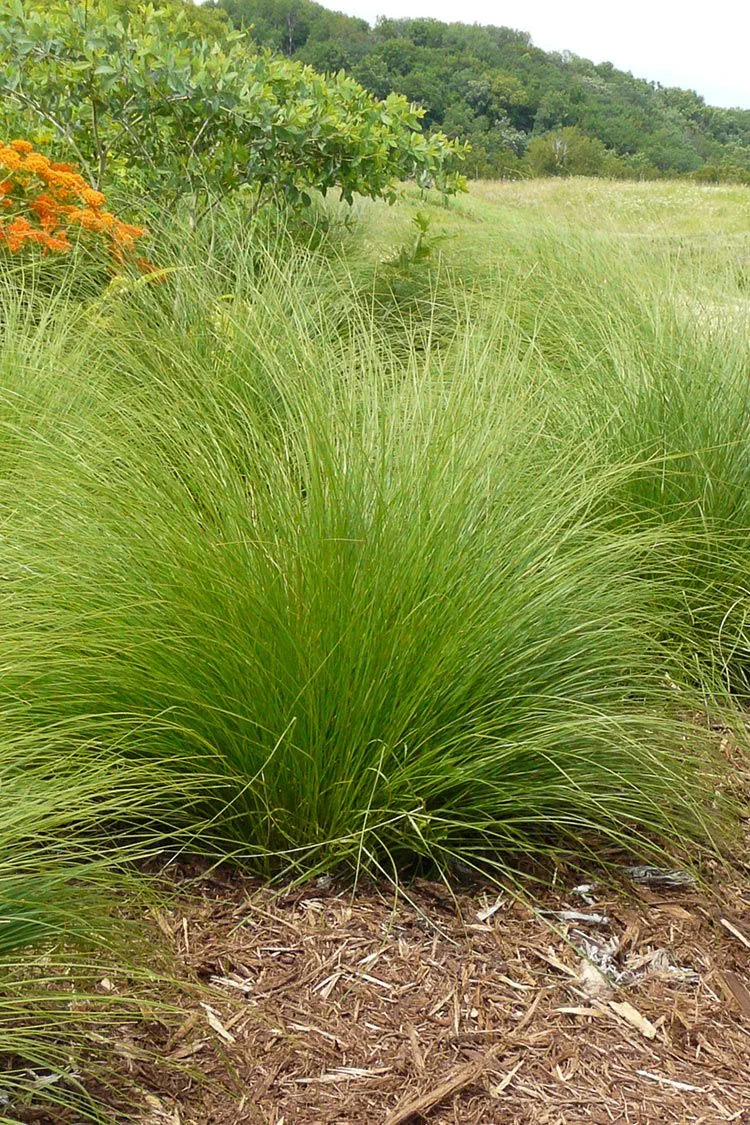
Close-up of Prairie Dropseed (Sporobolus heterolepis) showing fine-textured fountain grass foliage and seed heads in a professionally designed native bed
Prairie Dropseed (Sporobolus heterolepis)
2–3 ft • Structure & movement

Fine-textured fountain grass that provides elegant year-round form, golden-copper fall color, and excellent drought tolerance once established.
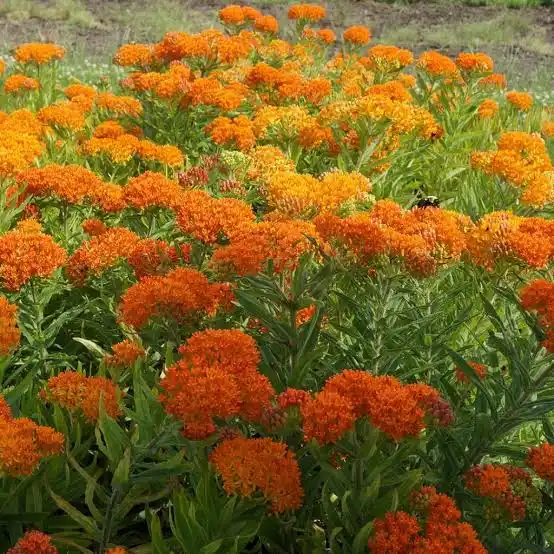
Close-up of Butterfly Milkweed (Asclepias tuberosa) with bright orange flower clusters, a key pollinator plant in native landscaping beds
Butterfly Milkweed (Asclepias tuberosa)
1.5–2.5 ft • Pollinator focal

Bright orange summer clusters. Major nectar source and monarch larval host. Compact and showy in beds; no messy milky sap.
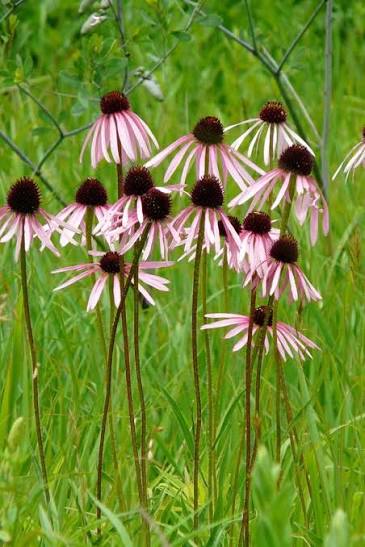
Close-up of Pale Purple Coneflower (Echinacea pallida) with slender drooping petals, an iconic native prairie species for designed beds
Pale Purple Coneflower (Echinacea pallida)
2–3+ ft • Mid-layer bloom

Slender elegant form with drooping pale petals. Iconic prairie species; very drought tolerant with seed heads for songbirds.
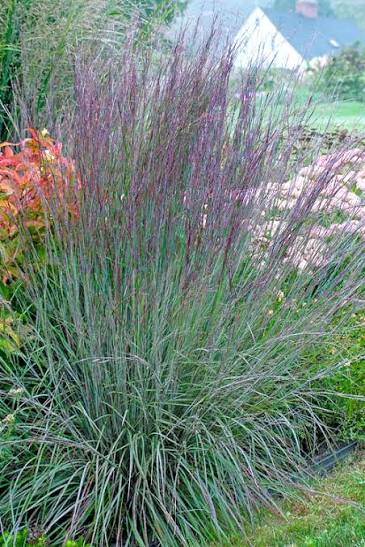
Close-up of Little Bluestem (Schizachyrium scoparium) showing blue-green foliage and striking red-orange-bronze fall color in a native plant bed
Little Bluestem (Schizachyrium scoparium)
2–4 ft • Vertical + fall color

Blue-green summer turning striking red-orange-bronze in fall and winter. Clump-forming structure that works beautifully in designed beds.
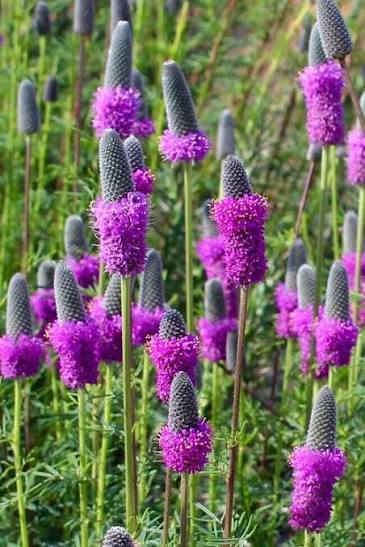
Close-up of Purple Prairie Clover (Dalea purpurea) with cylindrical purple flower spikes, used as a front-edge plant alongside Missouri Primrose in native beds
Missouri Primrose & Purple Prairie Clover
Low to 2 ft • Edge color

Large yellow primrose flowers (spring/summer) and purple clover spikes. Excellent front-edge performers that tolerate poor/dry soils. (Purple Prairie Clover shown.)
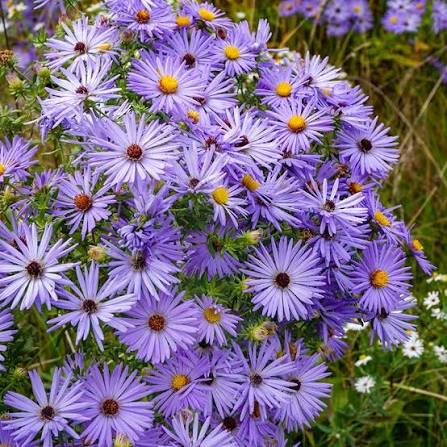
Close-up of Aromatic Aster (Symphyotrichum oblongifolium or similar) showing purple-blue daisy-like late summer to fall blooms for extended pollinator support
Aromatic Aster & Late-Season Blooms
1–3 ft • Extended pollinator support

Purple/blue daisy-like flowers into fall. Keystone species for late-season bees and butterflies while providing additional winter seed resources.

These close-up images show key species from our core sunny-bed palette (drawn from Grow Native! resources). Full palette details, design principles, and additional options (shade, moist/rain garden) are available in our service documentation. Request the complete plant list →

THE TRAIL CUTTER DIFFERENCE

Professional Process, Reliable Results

Our process (high-level): Site assessment → Design with regional natives from Grow Native! resources → Professional installation with proper site prep, layering, and mulch/edges → Focused establishment support through the critical first 1–3 years.

We emphasize avoiding the common failures of native plantings. Pair with smart irrigation from our Hunter team for worry-free first years while roots develop — then enjoy dramatically lower water needs.

Learn about irrigation bundling for establishment →

Service Options

Custom quotes based on site visit, size, and goals. These are starting points — every bed is designed for the specific property.

Standard Native Bed

Core sunny palette with balanced structure, color, and pollinator value. Clean professional installation with mulch and defined edges.

Most popular starting point

Premium Feature Bed

Larger or higher-visibility beds with enhanced layering, more species diversity, or special focal plants. Ideal for entryways and main views.

Full Yard / Turf Conversion

Partial or complete conversion of lawn areas to native plantings. Often combined with drainage improvements and irrigation redesign.

Pollinator / Rain Garden Add-ons

Specialized zones emphasizing monarch habitat or stormwater management using adapted native species for moist conditions.

Seasonal Maintenance Program

Years 1–3 establishment visits plus ongoing care (weeding, cutback, monitoring) so your investment performs as designed.

Integrated Outdoor Projects

Native beds as part of patios, retaining walls, lighting, or full outdoor living. Best results when planned together with our other teams.

See Outdoor Living →

How It Works

A clear, professional process focused on getting the design right and giving your native beds the best possible start.

01

Free On-Site Design Consultation

We assess sun, soil, drainage, views, and your goals (pollinators, low maintenance, curb appeal, rain garden, etc.).

02

Custom Design & Quote

Plant palette, bed sizes, and layout tailored to your property using Grow Native! aligned species and proven design principles.

03

Site Prep & Planting

Proper bed preparation, correct plant spacing and layering, quality mulch, and crisp defined edges for an immediately attractive result.

04

Establishment Support (Year 1)

Critical period guidance or optional visits. Watering protocol, weeding, and monitoring so roots develop successfully.

05

Ongoing Care & Bundles

Optional seasonal maintenance program plus smart irrigation options for worry-free performance and maximum water savings long-term.

See irrigation for establishment →

Service Area

Professional native plant bed design and installation for properties across the Kansas City metro area and Leavenworth region — generally within a 1-hour drive of Leavenworth, KS. This practical 35-mile radius coverage includes suburban lots, acreage, and rural properties that benefit from lower-maintenance, wildlife-supporting landscapes.

Leavenworth, Lansing, Basehor, Tonganoxie, Bonner Springs, Edwardsville, Kansas City KS (western areas), Platte City, Weston, Parkville, Riverside, Liberty (western edge), Smithville (southern areas), Atchison, and many surrounding communities and rural properties.

Exact eligibility based on 35-mile radius from central Leavenworth. View full service areas →

What Our Clients Say

★★★★★

"We replaced a difficult-to-mow slope with a native bed. It looks beautiful year-round and the watering is dramatically lower now that it's established. The team got the design right the first time."

The Henderson Family — Basehor
★★★★★

"I wanted something that actually supported monarchs and bees without looking messy. These beds have structure and color in every season and the neighbors keep asking who did it."

Linda R. — Leavenworth
★★★★★

"They designed and installed beds around our new patio and coordinated the irrigation for the first two years. Everything took well and we’ve had almost no supplemental water since year three."

Mark & Jen T. — Near Parkville

Early feedback from initial native bed projects. Real client stories and photography coming soon.

Frequently Asked Questions

How long until the beds look full and require less maintenance?

Most native beds reach good establishment and lower water needs in 2–3 growing seasons with proper care the first year or two. We provide clear establishment guidance (and optional visits) because this phase is where many plantings fail.

Will it look “wild” or weedy?

No. We focus on designed, attractive residential beds with clean mulch, defined edges, proper density, and layered structure. The goal is a tidy, intentional look that still delivers ecological benefits — not a prairie reconstruction.

Do native beds really use less water?

Yes, once established. The first 1–3 years require attentive watering (exactly why we recommend bundling with smart irrigation). After that, the deep-rooted species we use are far more drought tolerant than turf or most non-natives.

Can I bundle this with irrigation or hardscape work?

Absolutely — and we strongly encourage it. Installing native beds at the same time as irrigation, drainage, patios, or lighting produces better results and avoids disturbing new plantings later. One team, coordinated schedule.

What about shade or wet areas?

Our standard offering focuses on full-sun beds. We can develop shade-tolerant or moist/rain-garden palettes as part of custom projects. Let us know your site conditions during the consultation.

How do we get started and what does a quote involve?

Schedule a free on-site design consultation. We’ll evaluate the space, discuss your goals and budget range, and provide a tailored proposal with plant list and bed layout. No obligation.

Ready for native beds that look great and perform?

Let’s design a planting using proven local species that supports pollinators, reduces long-term work, and fits the way you actually use your yard.

35-mile radius around Leavenworth • Leavenworth County + northwest KC metro • Grow Native! aligned species